Pictograms for children
Ready-made cards to print – or your own child on the cards. For mornings, bedtime and everything in between.
What the cards look like
Pictograms for children, ready to print
One card per step, with the name underneath. Print on A4 at home, cut out, hang at the child's eye level. Here Noah's morning; the other routines are below.
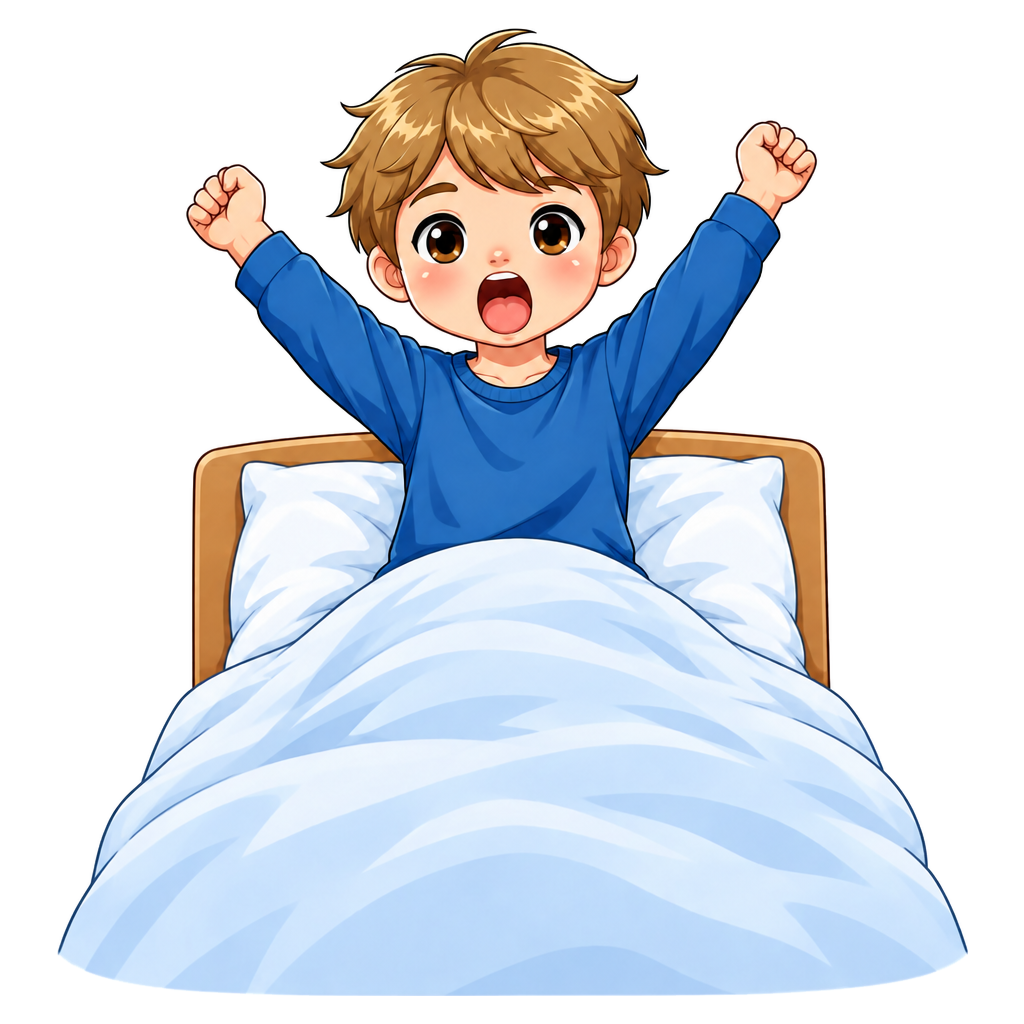
1. Wake up 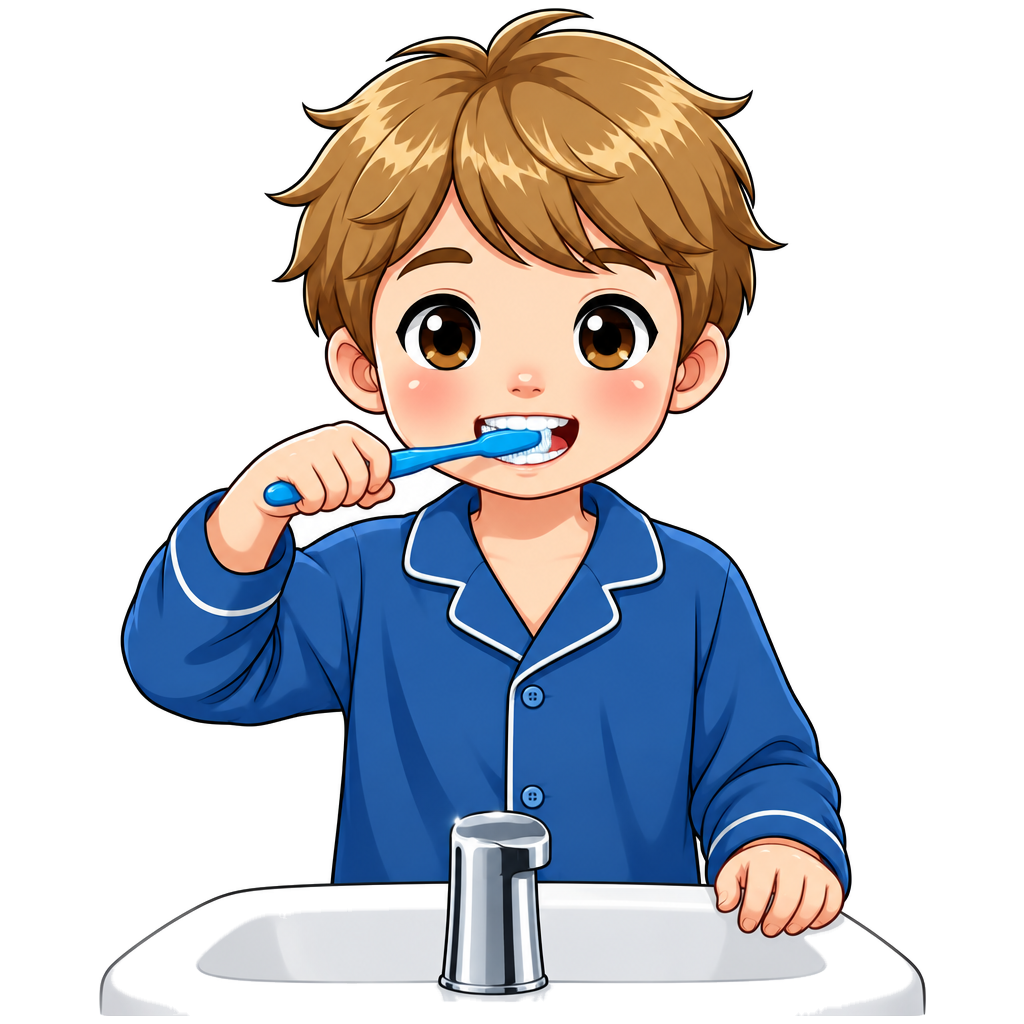
2. Brush teeth 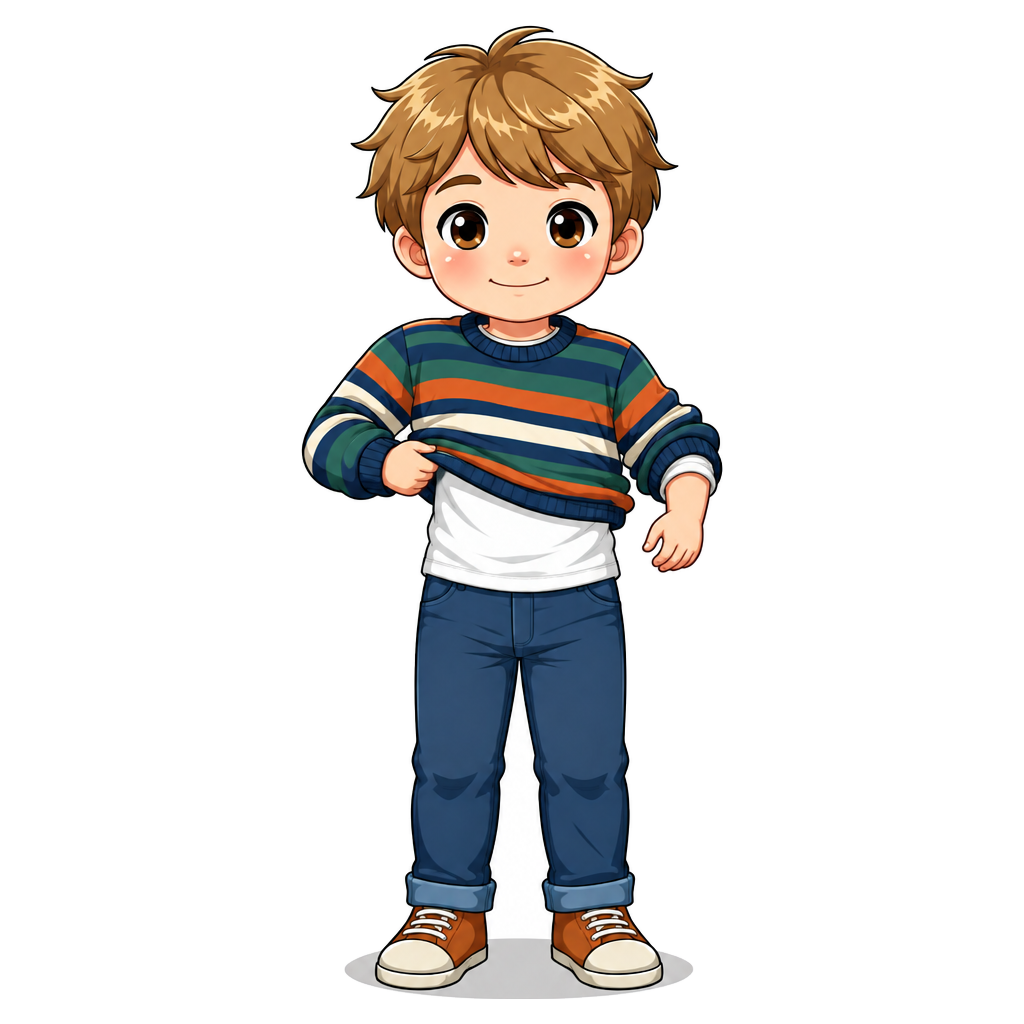
3. Get dressed 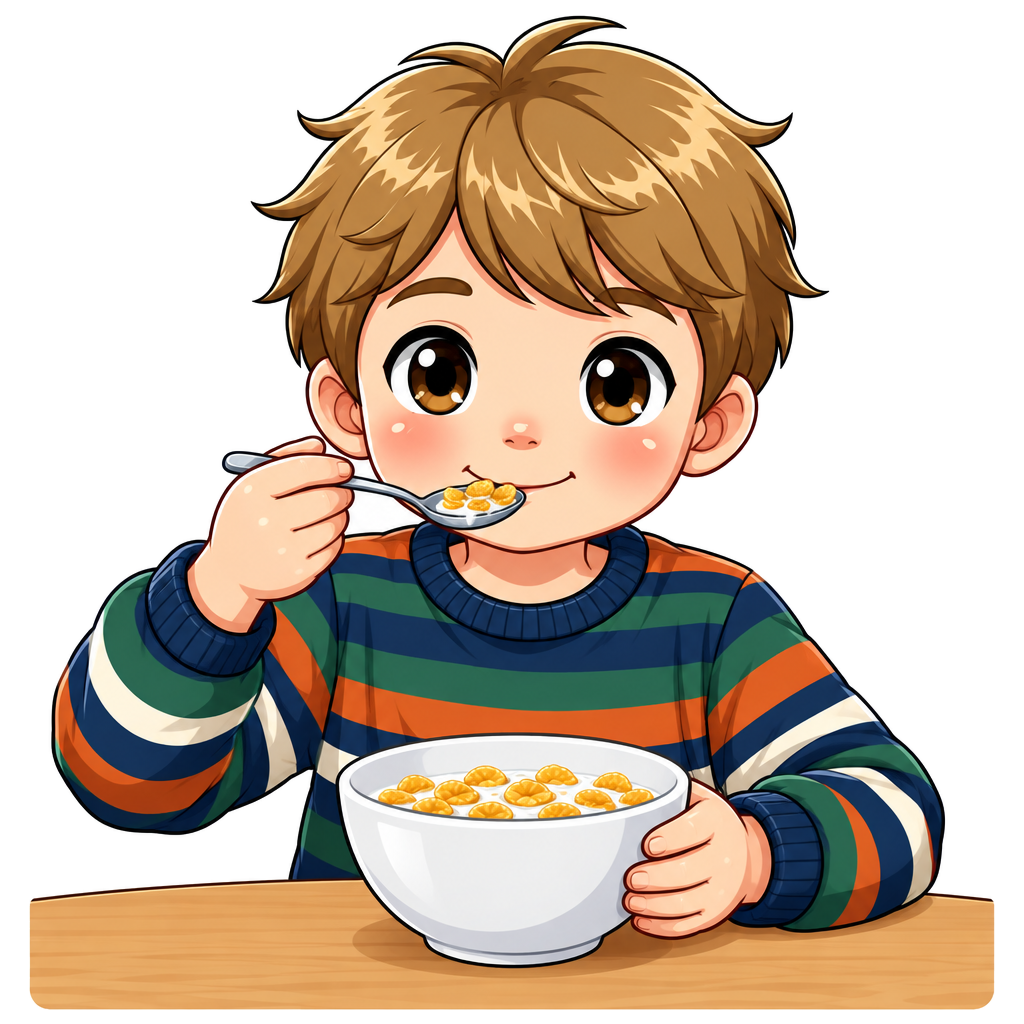
4. Eat breakfast 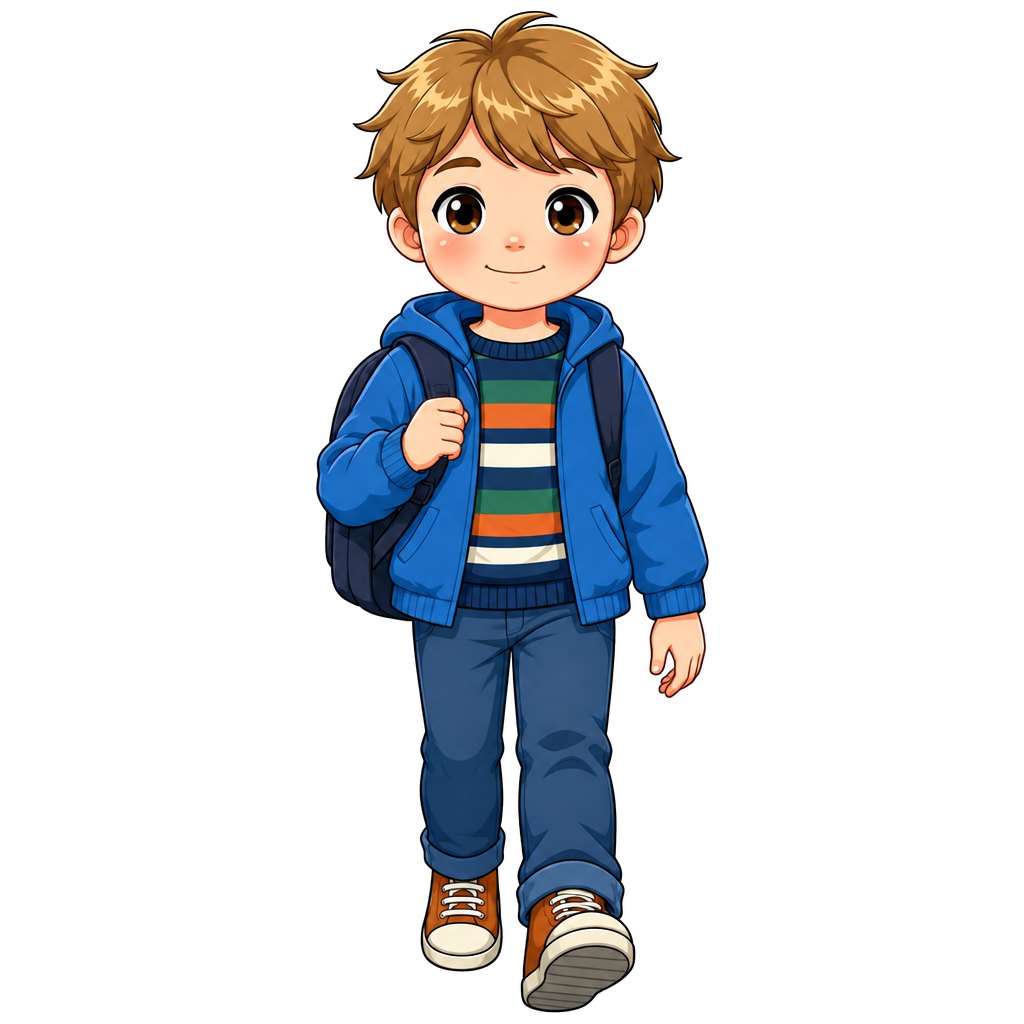
5. Go to school 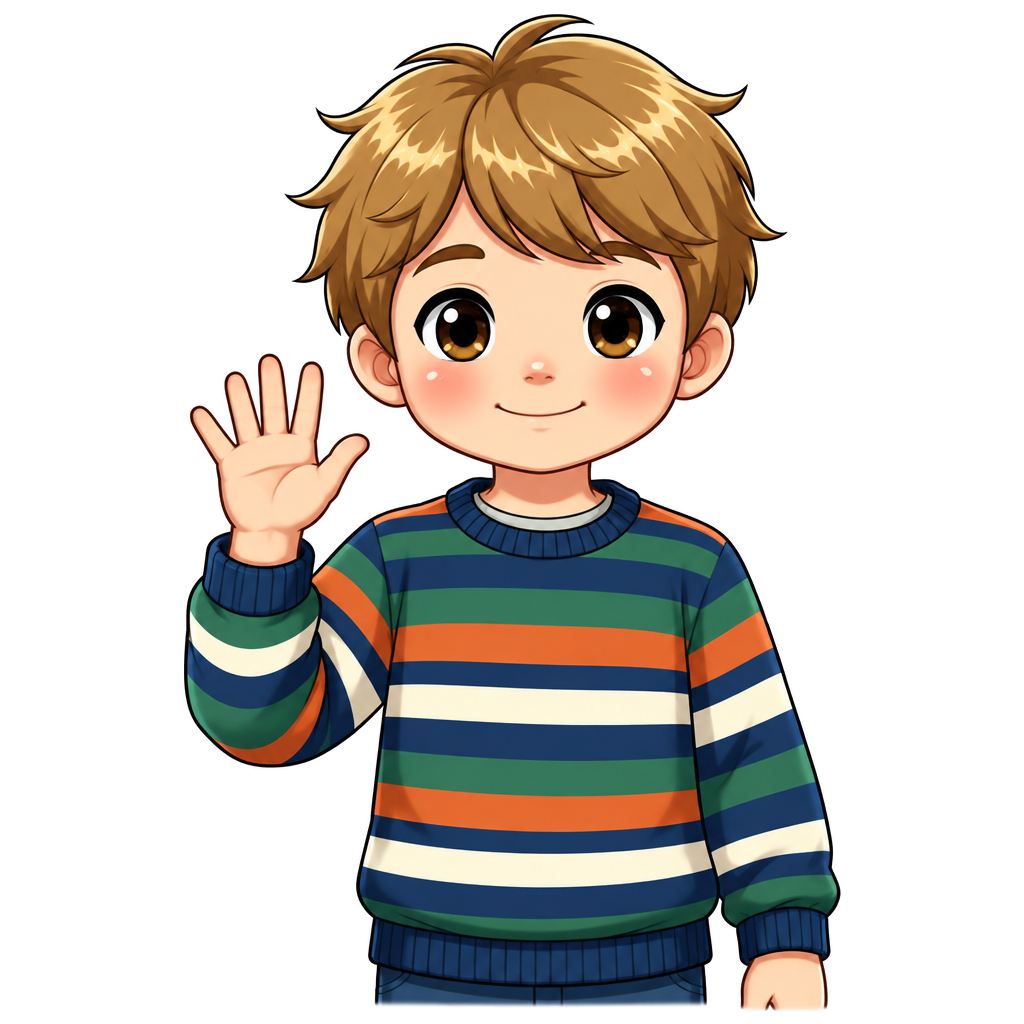
6. Wave goodbye
Ready-made cards with Noah and Nora
Six routines as A4 sheets: morning, bedtime, getting dressed, handwashing, ready for school and a weekly plan. No account.
- Morning routine for children – free schedule with pictograms
- Bedtime with pictograms
- Getting dressed step by step with pictograms
- Handwashing – six pictograms for the sink
- Ready for school – pictograms for getting out the door
- Weekly plan for children – print a weekly schedule with pictograms
- Now and next – free two-space visual board
- School-day transitions – free visual cards
- Christmas with room for breaks – free visual plan
- After-school routine – free picture cards
Your own child on the cards

One photo becomes a figure. Two routines as print-ready A4 sheets. Pay once – no subscription, nothing is shipped.
See the starter pack →Pictograms for children are small cards that show one step at a time: wake up, get dressed, brush teeth. Put in order they become a routine the child can follow. Here you find ready-made routines to print – and the option of having your own child on the cards.
What are the cards?
Each card shows one action with a name underneath. The cards show the order of a routine: you can point to the next step and turn the card over when it is done. The ready-made routines here show Noah and Nora; with the starter pack they show your own child.
How do we use them?
Print on A4, cut out the cards, and hang them at the child's eye level where the routine happens – the bathroom door, the fridge, the hallway. Laminating is worth it for anything used daily; plain paper is fine for trying something new. Say the step, point to the card, do it. Same words and same cards every time. Adapt the cards to your everyday life and try out what works for you.
Which routine should we start with?
The one that causes the most friction – for most families the morning or bedtime. Begin with three to five cards, not the whole day. Add cards once the first ones stick. The cards can also prepare a child for something new, such as a visit or a holiday, by showing what will happen in the order it happens.
How to build a visual schedule
- Pick the situation. Start with one routine that causes friction — the morning, the cloakroom, or the play-to-mealtime transition. One schedule at a time.
- Create the pictograms. Describe each step in plain words (e.g. "brush teeth") and generate the motif in the style that fits the child — and stick with it.
- Print and place. Print at the right physical size (3–8 cm), laminate, and mount the schedule at eye level where the routine happens.
- Use it the same way every time. Point to the step, do it, mark it done. Consistency beats perfect images — and use the same motifs everywhere.
You can also build the schedule digitally in Pictofy's schedule tool and share it — or start from ready-made motifs in the free library.
Use pictograms for
Frequently asked questions
What is free?
The six ready-made routines with Noah and Nora. Download them as A4 sheets and print at home – no account.
What does it cost to have your own child on the cards?
The starter pack costs 149 kr once: one personal figure from a photo and two routines as print-ready A4 sheets. Not a subscription. All details on the starter pack page.
Does anything arrive by post?
No. Both the free sheets and the starter pack are for home printing. Physical cards, stickers and magnets are a separate purchase in the shop.
What happens to the photo – and if the figure does not look right?
The photo is used only for your figure, is processed in the EU/EEA and can be deleted at any time. You see the figure before the routines are made; if it is not right, try another photo. The short answer is on the starter pack page, the long one in the privacy policy.
How would you like to start?
Get a ready-made routine for free, or get two routines with your own child as the figure.